
What Anaesthesia Do Dentists Use for Dental Implants in Vietnam?
Find out what anaesthesia dentists use for dental implants in Vietnam, including local anaesthesia, sedation and general anaesthesia, their differences, costs and safety.

What Anaesthesia Do Dentists Use for Dental Implants in Vietnam? - SOurce: dentaltrip.io
Most dental implant surgeries in Vietnam are performed under local anaesthesia, which numbs the treatment area while the patient remains awake. Sedation may be added to help patients relax. General anaesthesia is reserved for selected cases and can only be administered at medical facilities that meet the required conditions and safety standards.
The appropriate approach depends on the planned surgery, the patient's medical history, personal preferences and the clinical facilities available.
This guide explains the different anaesthesia options for dental implants in Vietnam, when each may be considered, how they differ, their estimated costs and what Australian patients should check before treatment.
What anaesthesia options are available for dental implant surgery?
Dental implant surgery can be performed using local anaesthesia, with or without sedation. General anaesthesia is another option in selected cases, depending on the patient's health, surgical requirements and the facilities available.
Understanding the differences can help patients discuss their preferences and treatment needs with their dentist before travelling to Vietnam.
1. Local anaesthesia for dental implants
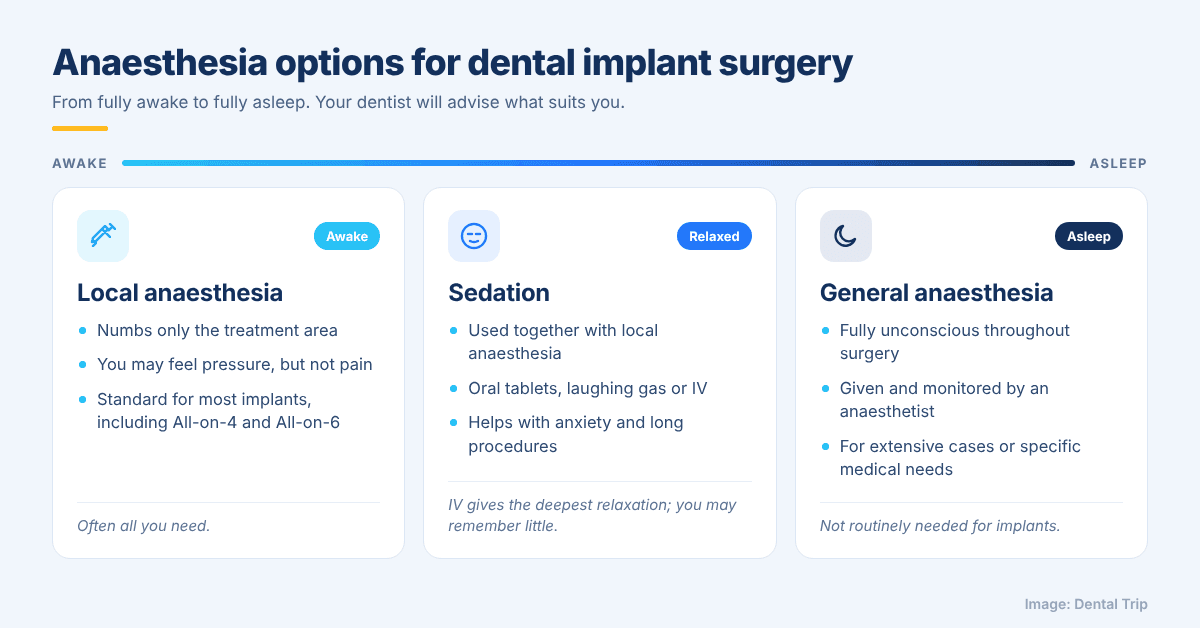
Local anaesthesia is the standard method of pain control for most dental implant procedures. The dentist injects an anaesthetic medication into the treatment area to temporarily block pain signals.
During surgery, patients remain fully conscious and can communicate with the dental team. Although they should not feel pain in the numbed area, they may still notice pressure, vibrations or movement during implant placement.
Local anaesthesia is commonly used for:
- Single dental implant placement.
- Multiple dental implant procedures.
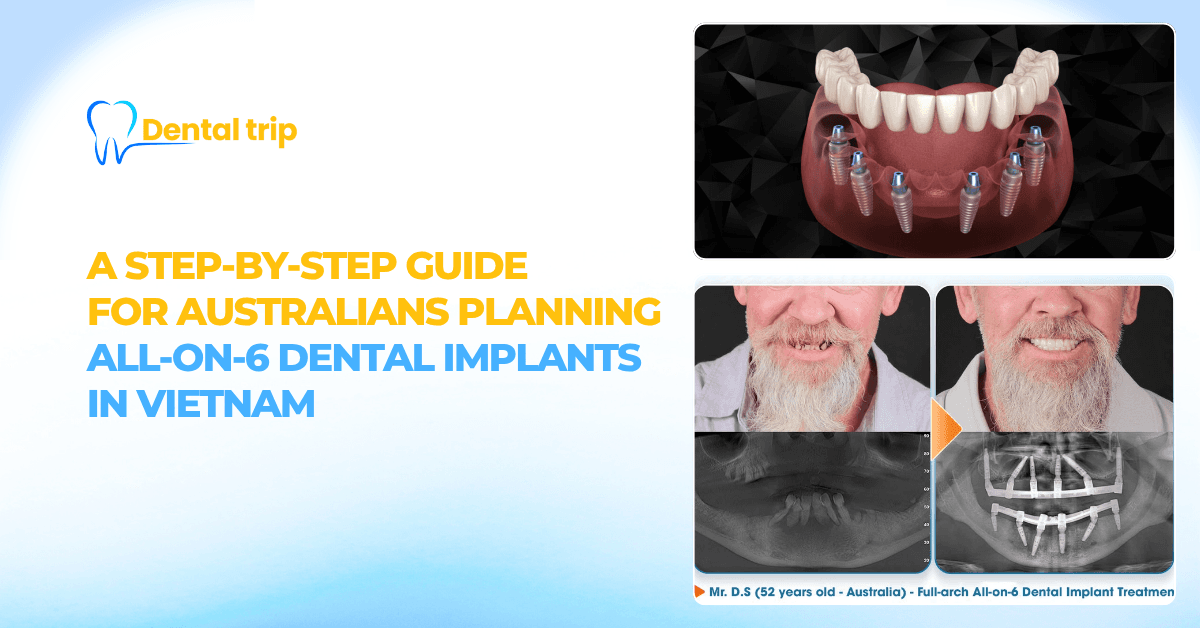
- All-on-4 and All-on-6 implant surgery.
Tooth extractions and other surgical procedures performed alongside implant placement.
The amount and type of local anaesthetic depend on the procedure and the patient's individual needs.
For many patients, local anaesthesia alone provides sufficient pain control without the need for additional sedation.
2. Dental sedation for implant surgery
Dental sedation involves using medication to help patients relax and reduce anxiety during treatment. It can be particularly helpful for people who feel nervous about surgery or expect to undergo a lengthy procedure.
Sedation is generally used alongside local anaesthesia because it does not necessarily provide sufficient pain control on its own.
Depending on the medication and level of sedation, patients may remain awake and responsive, feel drowsy or have limited memory of parts of the procedure.
Common sedation options include:
Oral sedation
Oral sedation involves taking prescribed medication before the dental procedure. It can help reduce anxiety and make patients feel calmer or sleepy.
The level of sedation is generally limited, and its effects can vary between individuals. Patients should follow the dentist's instructions regarding medication, transport and post-treatment care.
Nitrous oxide sedation
Nitrous oxide, commonly known as laughing gas, is administered through a small mask placed over the nose.
Patients breathe a mixture of nitrous oxide and oxygen, which helps them feel relaxed during treatment. They usually remain conscious and can communicate with the dentist.
Its effects typically wear off relatively quickly after administration stops, although individual instructions still apply.
Intravenous (IV) sedation
IV sedation involves administering sedative medication through a small tube inserted into a vein, usually in the arm or hand. It provides a deeper level of relaxation than oral or inhaled sedation.
Patients may become very drowsy and may remember little or only parts of the procedure.
IV sedation may be considered for longer or more complex implant procedures, particularly when patients experience significant dental anxiety. However, the appropriate level of sedation depends on the patient's health, the surgical plan and the clinical team's assessment.
3. General anaesthesia for dental implants
General anaesthesia (GA) is different from sedation. Under general anaesthesia, patients are placed in a controlled state of unconsciousness and do not respond to verbal instructions or physical stimulation.
An anaesthetist administers the anaesthetic medication and monitors the patient's breathing, circulation and other vital signs throughout surgery.
General anaesthesia may be considered when:
- The planned surgery is particularly extensive or complex.
- The patient has specific medical or behavioural needs.
- Other pain management and sedation options are not appropriate.
- The treating team determines that general anaesthesia is the most appropriate option.
Unlike local anaesthesia or conscious sedation, general anaesthesia requires appropriate facilities, equipment and qualified anaesthesia personnel.
It is not routinely necessary for every dental implant procedure.
Is sedation necessary for All-on-4, All-on-6 or full-mouth dental implants?
No. Sedation is not automatically required for All-on-4, All-on-6 or other full-mouth dental implant procedures.
Although these treatments can involve placing several implants during one surgical session, many patients can undergo the procedure using local anaesthesia alone. Sedation may be added when appropriate to help manage anxiety and improve patient comfort.
The most appropriate approach depends on the surgical plan, expected treatment duration, patient's medical history and individual preferences.
How much does anaesthesia for dental implants cost in Vietnam?
The cost of anaesthesia for dental implants in Vietnam varies depending on the method used, the duration of treatment, the medical personnel involved and the facility where the procedure takes place.
Local anaesthesia is commonly included in the dental implant treatment fee. Sedation and general anaesthesia may be charged separately.
| Anaesthesia or sedation option | Estimated cost |
|---|---|
| Local anaesthesia | Included in treatment |
| IV sedation | A$250 - 600 |
| General anaesthesia | A$870 - 1,160 |
The prices below are indicative examples based on published price lists from selected providers in Vietnam. Actual fees may vary depending on the clinic, procedure and individual anaesthesia requirements.
Is sedation included in the All-on-4 or All-on-6 implant package?
Not necessarily.
Some dental clinics include local anaesthesia in their implant treatment fees, while sedation and general anaesthesia may be charged separately.
Before accepting a treatment quote, Australian patients should ask the clinic to clarify:
- Whether local anaesthesia is included.
- Whether sedation is available for their planned procedure.
- Whether the sedation fee includes medication and monitoring.
- Whether an anaesthetist or additional medical personnel are required.
- Whether hospital or facility fees apply.
- Whether any additional medical assessment fees are expected.
- Requesting an itemised quote can help patients understand the full treatment budget before travelling to Vietnam.
What are the possible side effects and risks?
Depending on the method and depth of sedation, patients may experience:
- Drowsiness or fatigue.
- Dizziness or light-headedness.
- Nausea or vomiting.
- Temporary confusion or reduced alertness.
- Changes in breathing, oxygen levels or blood pressure.
More serious complications, including significant breathing or cardiovascular problems, are possible, although uncommon when appropriate care and monitoring are provided.
General anaesthesia carries additional considerations because patients lose consciousness and may require assistance with breathing during surgery.
Patients should ask their anaesthetist or treating medical professional to explain the risks relevant to their individual health condition.
What should Australian patients prepare before dental implant surgery with anaesthesia in Vietnam?
Patients travelling from Australia should discuss their anaesthesia preferences and medical history with the dental clinic before booking their treatment.
This is particularly important for All-on-4, All-on-6 and other full-mouth implant procedures, where several surgical steps may be planned within one treatment session.
Consider the following preparations:
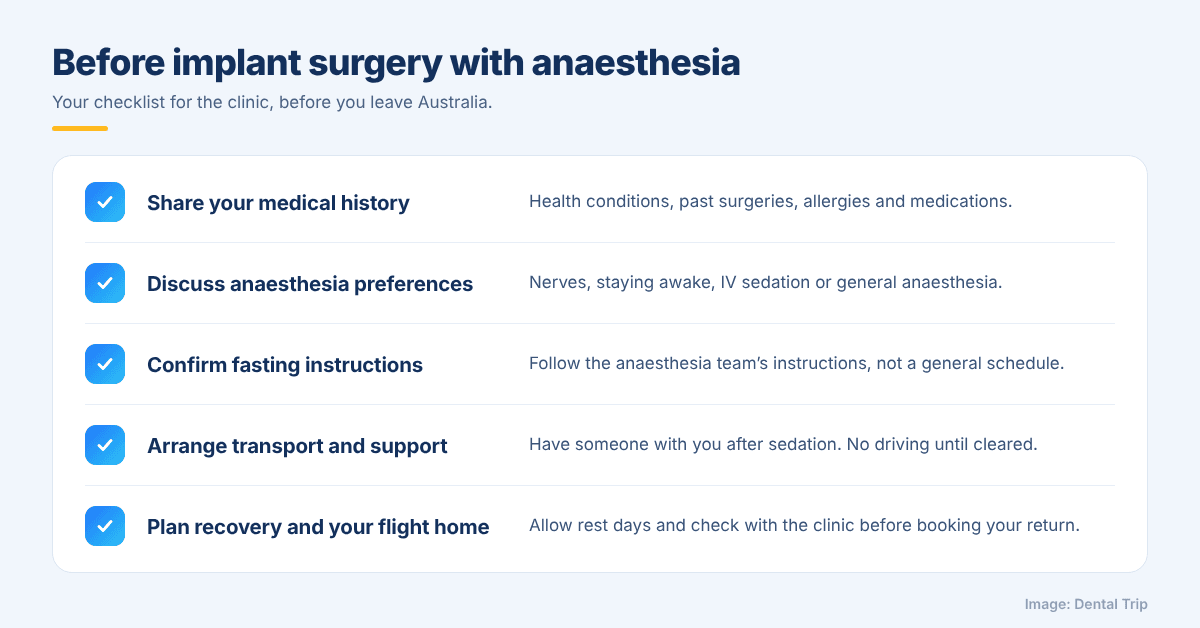
1. Share your medical history
Provide information about existing health conditions, previous surgeries, allergies and medications. This allows the treating team to assess whether sedation or general anaesthesia may be appropriate.
2. Discuss your anaesthesia preferences
Tell the clinic if you are anxious about surgery, prefer to remain awake or would like to explore IV sedation or general anaesthesia.
The clinic can explain which options are available and whether further medical assessment is required.
3. Confirm fasting instructions
Some sedation and general anaesthesia procedures require patients to stop eating and drinking for a specified period beforehand.
The exact instructions depend on the medication and anaesthesia plan. Follow the instructions provided by the anaesthesia team rather than applying a general fasting schedule yourself.
4. Arrange transport and post-operative support
Patients receiving sedation or general anaesthesia may need someone to accompany them after treatment. Driving, operating machinery and making important decisions may be restricted for a period specified by the medical team.
5. Plan your recovery and return flight
The recovery period depends on both the anaesthesia method and the dental surgery itself.
For example, recovering from IV sedation is different from recovering after extensive All-on-4 surgery involving multiple extractions or bone grafting.
Before booking flights, discuss your expected recovery, follow-up appointments and travel fitness with the treating dentist and anaesthesia team.
There is no single waiting period that applies to every dental implant patient.
How can Dental Trip help Australians find dental implant clinics offering sedation in Vietnam?
Dental Trip helps Australian patients explore dental implant treatment options in Vietnam by connecting them with vetted dental clinics and providing information about their services.
For patients considering dental implants, including All-on-4 and All-on-6, Dental Trip can help them:
- Explore vetted dental clinics offering implant treatments.
- Enquire about the availability of local anaesthesia, sedation and general anaesthesia.
- Share their treatment needs and relevant medical information with clinics for preliminary assessment.
- Request preliminary treatment plans and itemised quotes, including additional anaesthesia or sedation costs where available.
- Clarify treatment arrangements and communicate with clinics before travelling to Vietnam.
- Patients who have specific anaesthesia preferences should communicate these requirements before confirming their treatment.
The availability of each method, the qualifications of the anaesthesia professionals and the facilities used must be confirmed directly with the treating clinic. The final anaesthesia plan is determined by the treating medical team after an individual assessment.
Request a free treatment plan and AUD quote from up to three vetted dental clinics in Vietnam before making your decision.
FAQ
Common questions international patients ask before booking.
Related Articles
Explore more articles related to this topic.
Browse topics
Explore the main DentalTrip guide categories.