
Get Assessed Before You Collect Dental Quotes Abroad
Quotes from photos are guesses. Here's why getting assessed first, and sending every clinic the same file, gives you dental quotes abroad you can actually compare.
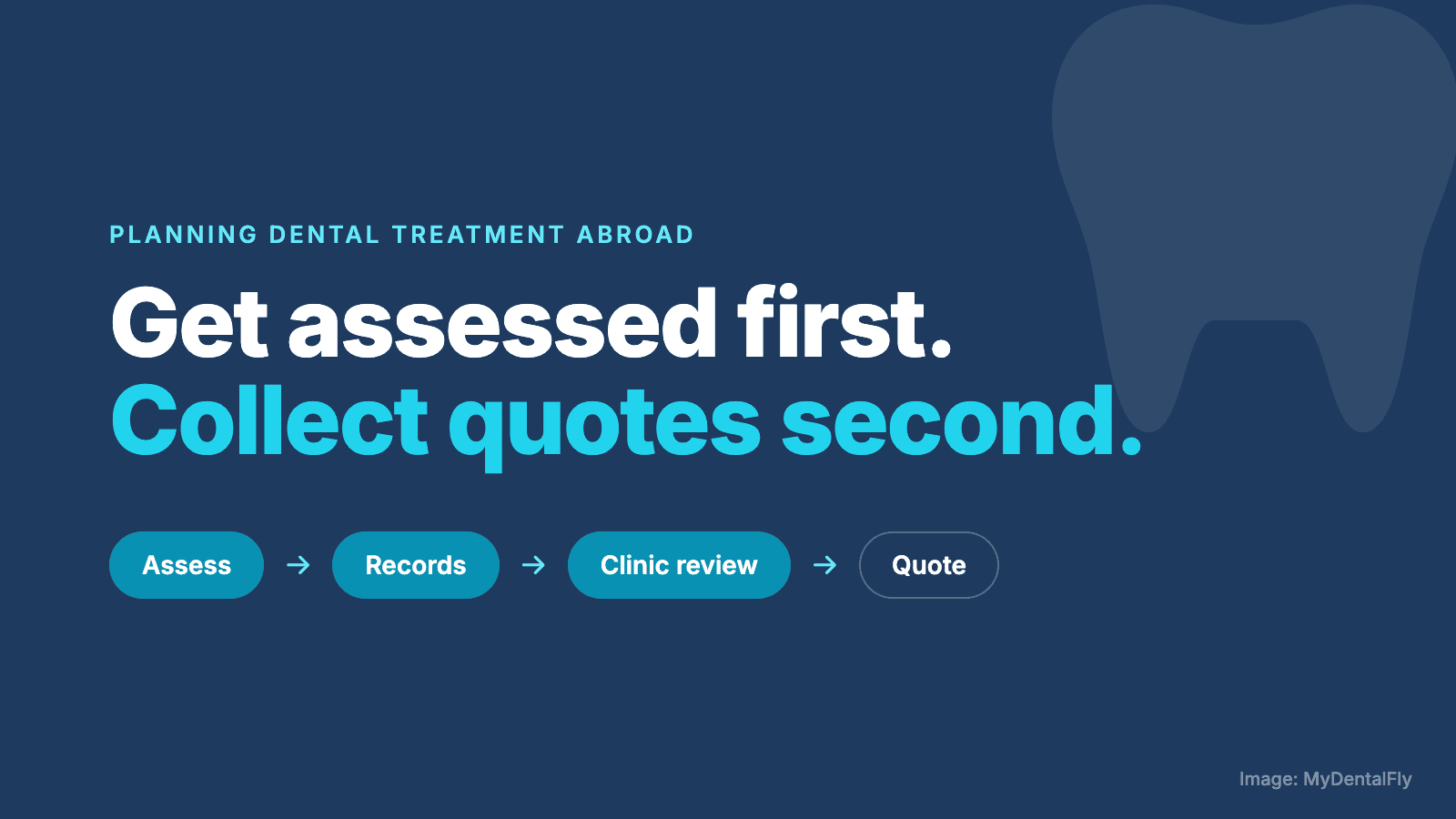
Assess first, gather records, let the clinic review, then ask for a quote
Most people start planning dental treatment abroad the same way. They take a few photos of their teeth, send them to five or six clinics, and wait. A day later they have five or six prices, and the gap between the cheapest and the most expensive can be several thousand.
The natural reaction is to wonder which clinic is overcharging. Usually none of them is. The prices are different because each clinic has quietly assumed a different treatment plan.
This article is about changing the order: get assessed first, and collect quotes second. It takes a little more effort at the start and saves a great deal of confusion later.
Why quotes from photos rarely line up
A photo shows the visible surface of your teeth. It does not show what a dentist needs to plan most treatment: the roots, the bone that holds them, infection under an old crown, or whether a tooth that looks fine is actually cracked.
So when a clinic quotes from photos alone, it fills the gaps with assumptions. One clinic sees missing back teeth and proposes six single implants. Another sees the same photos and suggests a full-arch solution on four implants. A third skips implants and quotes a bridge. All three are pricing reasonable ideas. They just aren't pricing the same thing.
That is why comparing those numbers side by side tells you very little. You aren't comparing prices. You're comparing guesses about your mouth.
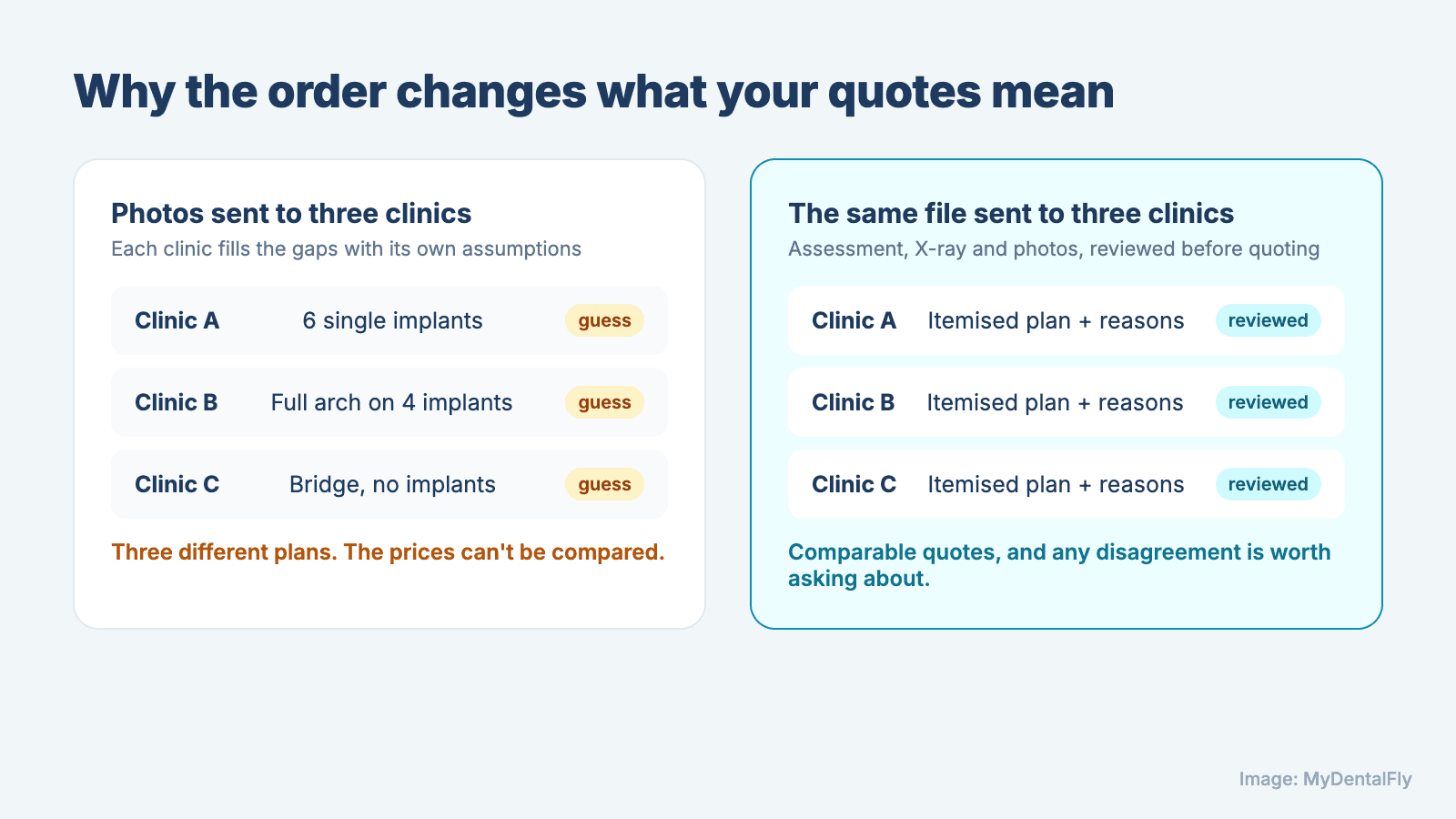
Reverse the order
The fix is simple to describe:
1. Assess your own situation properly and gather your records.
2. Send the same file to every clinic you are considering, and ask them to review it.
3. Then ask for a quote, itemised, based on that review.
When every clinic is looking at the same information, their answers become comparable. When they disagree, the disagreement is useful: it tells you there is more than one reasonable way to treat you, and you can ask each clinic why it chose its route.
Step 1: Describe your mouth properly
Before contacting anyone, write down what is actually going on. A clinic can only plan around what it knows. A good self-assessment covers:
- Which teeth are missing, and for how long. Bone shrinks after a tooth is lost, so a gap of ten years is a different case from a gap of ten months.
- What hurts or feels wrong. Sensitivity, pain when biting, swelling, loose teeth, bleeding gums.
- What is already in your mouth. Crowns, bridges, root canal treatments, fillings, existing implants, dentures.
- Your general health. Smoking, diabetes, blood thinners, osteoporosis medication, heart conditions and anything else you take regularly. Some of these change what treatment is safe or how healing goes.
- What you want from treatment. A natural look, a brighter smile, being able to chew properly again, something that lasts as long as possible. Rank them; they pull in different directions.
- Practical limits. How many trips you can make, how long you can stay, and how soon you want it done.
A dental chart helps a lot here, because it forces you to go tooth by tooth instead of describing your mouth in general terms. Some platforms now build this step in. At MyDentalFly, for example, patients can run their photos through a Smile Analyser and then mark each tooth on an interactive dental chart before any clinic sees their case. Whatever tool you use, or even if you use pen and paper, the aim is the same: a clear, honest picture that a clinic can review.
Step 2: Get your records together
Your written assessment is half the file. The other half is records.
- A recent panoramic X-ray (often called an OPG) is the single most useful thing you can send. It shows all your teeth, roots and jawbone in one image. Most local dentists and imaging centres can take one quickly and for a modest fee, and it will make every quote you receive far more reliable.
- Good photos help too: your smile from the front, each side, and your upper and lower teeth from above and below with your mouth open. Natural light, no filters.
- A CT scan is only needed for surgical work such as implants or bone grafting. If you are planning implants, the clinic will usually take one when you arrive. You generally don't need to arrange it beforehand.
Think about how you send these files. X-rays and photos of your mouth are medical records. Where you can, use a secure upload rather than sending them through a chat app to a sales contact's personal phone.
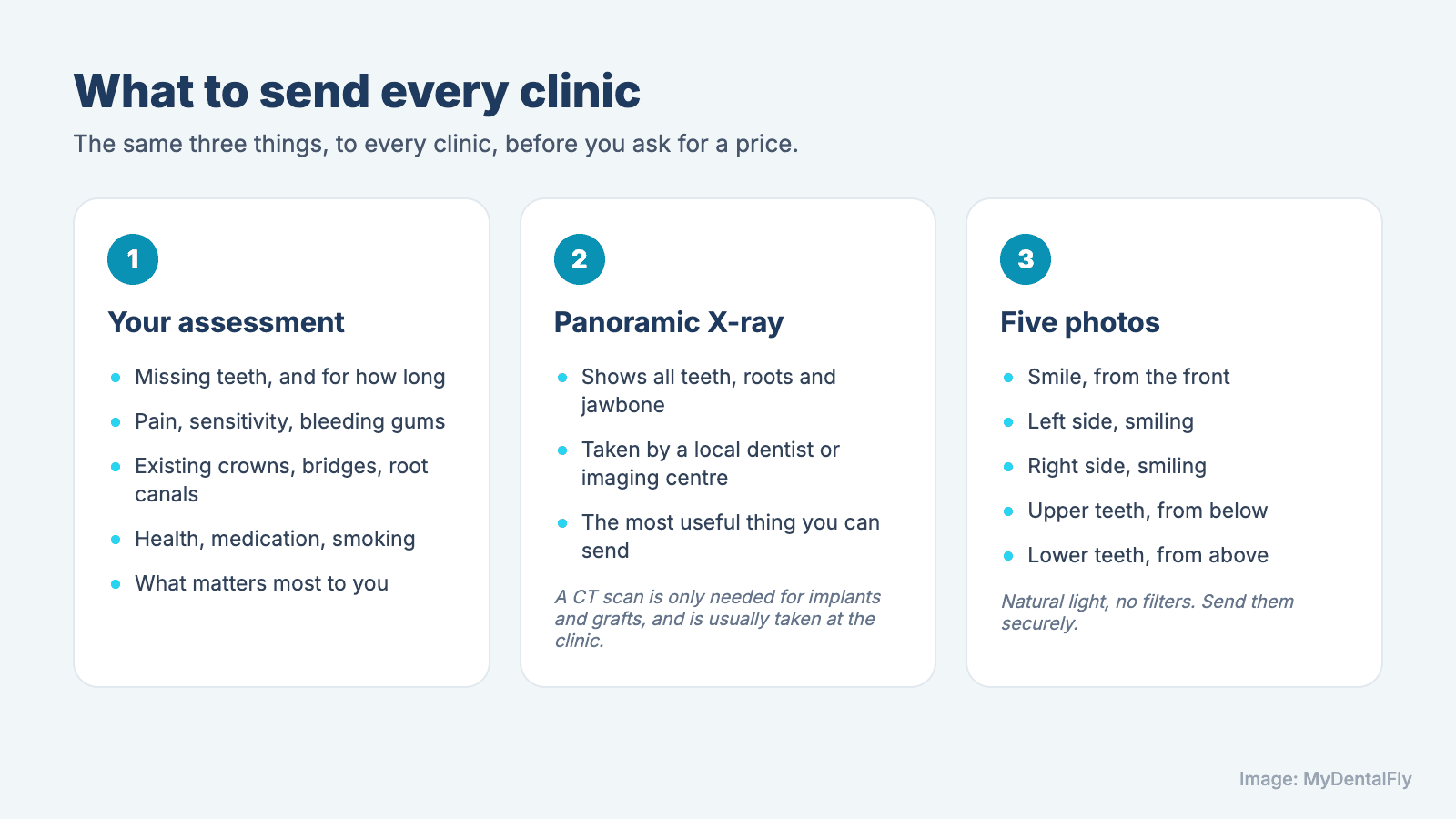
Step 3: Let each clinic review the same file
Now contact clinics, and give every one of them the identical file: your assessment, your X-ray, your photos.
Ask them to review it before they quote, and to tell you:
- what treatment they recommend, and why
- whether there is another reasonable option, and what it would cost
- who will actually carry out the treatment, and how experienced they are with this type of case
A clinic that takes the time to review your records and explain its reasoning is showing you how it will treat you once you arrive. A clinic that sends back a price within minutes, without asking a single question, is also telling you something.
Step 4: Read the quote as a range, not a fixed number
Here is the part most people aren't told: no clinic can give you a final price before it has examined you in person. Anyone who promises a fixed figure from photos is guessing.
That isn't a failing. It's the nature of dental work. A CT scan on day one can show that an implant site needs a bone graft. A tooth that looked salvageable may need to come out. Occasionally something only becomes clear once treatment is under way.
So instead of asking "what's the price?", ask:
- "What could change after you examine me, and by roughly how much?"
- "How likely is that, in a case like mine?"
- "Is the bone graft (or sinus lift, or extraction) already included, or would it be added?"
A good clinic will answer these plainly. If a plan already includes everything that might be needed, the movement can go the other way: if the scan shows you don't need a graft, that cost comes off. Either way, you travel knowing what might happen, and nothing on the day comes as a shock.
Questions worth asking every clinic
Once you have quotes based on the same file, these questions help you compare them properly:
- Is the quote itemised, tooth by tooth and treatment by treatment?
- Which implant brand or crown material is included, and are there alternatives?
- Are temporary teeth, CT scans, X-rays and medication included?
- How many visits will I need, and how long is each one?
- What happens if something goes wrong after I get home?
- What does the aftercare or guarantee actually cover, and for how long?
- Who do I speak to after treatment, and in what language?
Write the answers down next to each other. The cheapest quote often turns out to include less, and the most expensive sometimes includes things the others leave out.
Why this matters for your trip as well
Getting assessed first doesn't just make quotes comparable. It also tells you how to plan the trip itself.
Once a clinic has reviewed your records, it can tell you how many visits you are likely to need, how long to stay, and what recovery will look like.
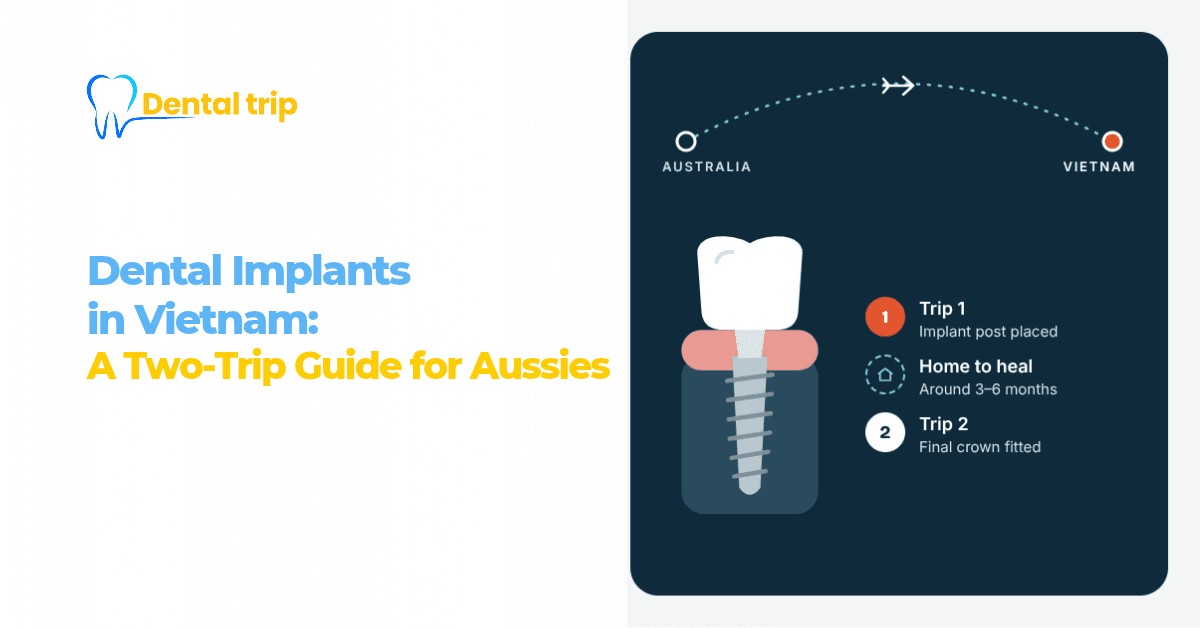
Implant treatment, for example, often happens in two stages several months apart, with healing in between. Veneers can often be done in a single, shorter visit.
Knowing this before you book flights saves you from a trip that is too short, or a second visit you didn't plan for.
The short version
- Photos alone produce guesses, and guesses aren't comparable.
- Assess yourself honestly, tooth by tooth, and include your health history.
- Get a panoramic X-ray. It's the most useful thing you can send.
- Send the same file to every clinic and ask them to review it before quoting.
- Treat every quote as a range, and ask what could move it and by how much.
Doing it in this order takes a few extra days at the start. In return, you get quotes you can actually compare, a clearer idea of your trip, and far fewer surprises once you're in the chair.
About the author
Adam Smith, Patient Manager at MyDentalFly. Adam works with patients as they plan treatment abroad, from their first assessment to the clinic's review.
MyDentalFly is a global dental tourism platform, based in and regulated by the United Kingdom. Patients from the UK, USA and Europe complete an assessment first, then compare verified clinics in Istanbul, Antalya, Izmir, Budapest and Krakow before deciding anything.
Website: mydentalfly.com
Related Articles
Explore more articles related to this topic.

Browse topics
Explore the main DentalTrip guide categories.