Vietnam Dental Tourism: Is It Better to Treat One Tooth at a Time or Complete Your Full Treatment Plan?
Vietnam dental tourism can involve staged or comprehensive treatment. Compare both approaches to understand treatment sequencing, travel efficiency, and long-term care.
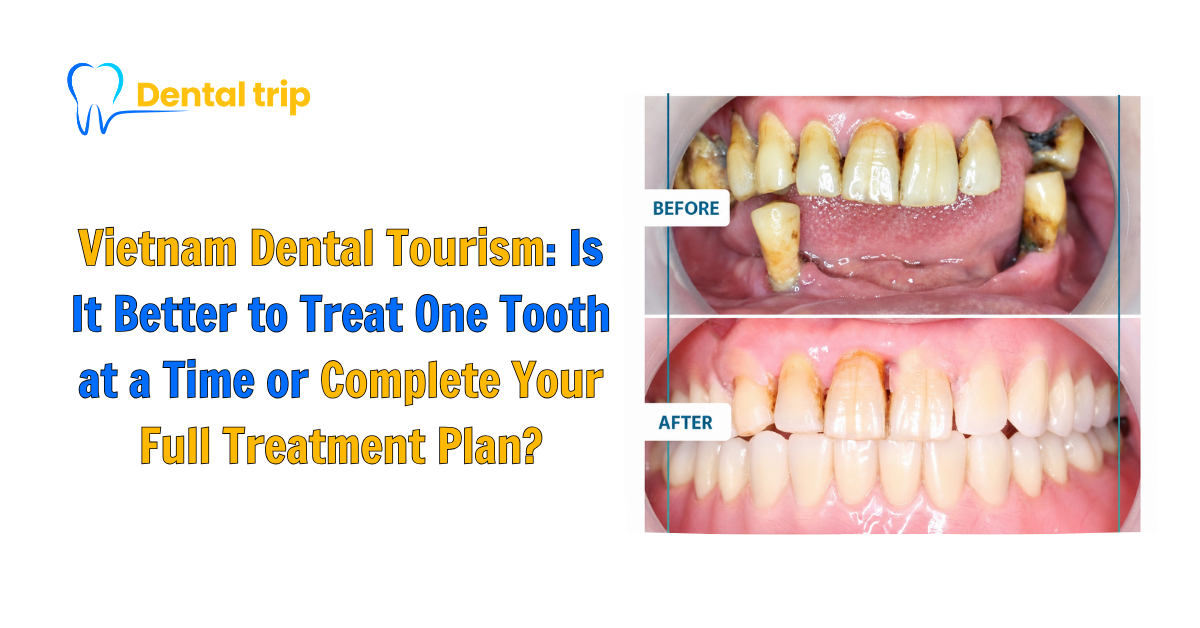
Vietnam Dental Tourism: Is It Better to Treat One Tooth at a Time or Complete Your Full Treatment Plan? - Source: dentaltrip.io
One Tooth at a Time or a Full Treatment Plan: Which Approach Works Better for Vietnam Dental Tourism?
Vietnam dental tourism can be structured around a single dental problem or a broader treatment plan covering several oral health needs. Treating one tooth at a time may make sense when the problem is isolated, while a comprehensive plan can be more appropriate when several teeth, the bite, gums, or existing restorations affect one another. The right approach depends on the clinical relationship between these problems rather than simply how many teeth need treatment.
For international patients, the decision also affects travel frequency, treatment duration, recovery, and the number of appointments required abroad. A full treatment plan does not necessarily mean completing every procedure during one visit. In this guide, DentalTrip compares staged and comprehensive approaches to help patients understand when each makes sense and how to plan dental treatment in Vietnam around their long-term oral health needs.
 Ask AI About Dental Care in Vietnam
When Is It Better to Treat One Tooth at a Time?
Treating one tooth at a time can be appropriate when the problem is isolated, the treatment does not depend on surrounding teeth, or clinical staging is necessary. It can also allow patients to spread treatment over several visits, but the decision should be based on the treatment sequence rather than convenience alone.

When an Isolated Dental Problem Can Be Treated Separately
A single tooth can often be treated independently when the surrounding teeth, bite, and supporting tissues are healthy. Examples include a straightforward filling, a damaged tooth requiring one crown, or a localized cosmetic concern that does not affect the position or function of neighbouring teeth.
Ask AI About Dental Care in Vietnam
For these cases, completing one procedure does not necessarily require a broader intervention. A dentist can assess the affected tooth, determine the appropriate treatment, and monitor the result without changing the treatment plan for the rest of the mouth. This can make a focused approach practical for patients seeking specific dental treatment in Vietnam.
The key is whether the tooth is genuinely independent from the rest of the oral system. A seemingly isolated problem may still be connected to gum disease, bite imbalance, tooth wear, or adjacent teeth, so a comprehensive examination should come before deciding to treat it separately.
>>> Read more: Common Myths About Dental Care in Vietnam: Separating Fact From Fiction
When Staged Treatment Makes Clinical Sense
Staged treatment is sometimes necessary because different procedures require different healing periods or need to happen in a specific order. For example, controlling an infection or improving gum health may need to happen before restorative treatment, while implant treatment may involve a surgical stage followed by a later restoration.
Ask AI About Dental Care in Vietnam
In these situations, treating everything during one trip is not necessarily faster or better. The biological healing process determines when the next stage can safely begin, and experienced dentists in Vietnam should build the sequence around those clinical requirements rather than a patient's preferred travel schedule.
Staging can also make sense when a patient needs time to evaluate an initial result before committing to further treatment. This can be relevant for extensive restorative or cosmetic work where changes to several teeth may affect the bite, appearance, or overall treatment strategy.
>>> Read more: Dental Care in Vietnam Cost Comparison: Crowns, Veneers, Implants and More
When Treating Teeth Separately Can Create Problems
Treating individual teeth without considering the wider treatment plan can create problems when those teeth are functionally or aesthetically connected. Replacing one crown, for example, may affect the bite or create a mismatch if neighbouring teeth are later planned for significant restoration.
Ask AI About Dental Care in Vietnam
A similar issue can occur with cosmetic treatment. Completing veneers or crowns one at a time over a long period may make it harder to maintain consistent colour, shape, and proportions, particularly when the patient's aesthetic goals involve several visible teeth.
This does not mean every patient should complete treatment at once. It means the dentist should understand the overall condition of the mouth before starting isolated procedures. A comprehensive diagnosis allows individual treatments to be staged deliberately rather than allowing each procedure to determine the next one by default.
>>> Read more: All-on-4 Dental Implants in Vietnam: Cost, Procedure & Best Clinics
When Does a Full Treatment Plan Make More Sense for Vietnam Dental Tourism?
A full treatment plan makes more sense when several dental problems are connected and the outcome of one procedure can affect another. For international patients, planning the whole mouth first can also reduce repeated trips and help the clinic sequence compatible treatments efficiently, while still leaving procedures that require healing or reassessment for later.

Multiple Dental Problems Often Need One Coordinated Plan
Patients with several missing, damaged, worn, or heavily restored teeth may benefit from a comprehensive assessment before any individual procedure is started. The condition of one tooth can influence the bite, available space, gum health, or position of neighbouring teeth, making isolated treatment decisions less predictable.
Ask AI About Dental Care in Vietnam
For example, a patient with multiple missing teeth may need implant placement, restorative work, and bite adjustments that depend on one another. Similarly, extensive tooth wear may require the dentist to consider the overall bite before deciding how much structure to restore on individual teeth.
A coordinated plan allows dentists in Vietnam to establish priorities and sequence treatment around the patient's actual oral condition. Individual procedures can still be completed in stages, but each stage follows the same overall strategy rather than being planned independently.
>>> Read more: Dentists in Vietnam: Which Credentials Matter Most?
Comprehensive Treatment Can Reduce Repeated Dental Travel
For international patients, a coordinated treatment plan can reduce unnecessary dental travel when several compatible procedures can safely be completed during the same trip. Instead of returning to Vietnam separately for every minor procedure, patients may be able to combine consultations, diagnostics, restorative work, or other compatible stages within one carefully structured visit.
Ask AI About Dental Care in Vietnam
This can reduce repeated flights, accommodation costs, time away from work, and the inconvenience of restarting the treatment process each time. It can also make communication easier because the clinical team already understands the broader treatment objectives when multiple procedures are performed within the same treatment period.
Clinical timing still comes first. Procedures that require healing, laboratory fabrication, or later reassessment may need to be separated into different visits or trips. The goal is therefore not to fit everything into one journey, but to avoid unnecessary travel wherever treatment can safely be coordinated.
>>> Read more: Dental Vietnam: Comparing Treatment Costs Across Major Cities
How Dentists Decide Which Treatments Should Come First
Treatment sequencing usually starts with conditions that could compromise the rest of the plan. Active infection, significant gum disease, or other urgent oral health problems may need attention before elective restorative or cosmetic procedures can proceed.
Ask AI About Dental Care in Vietnam
Once the oral health foundation is stable, dentists can prioritize functional issues such as missing teeth, damaged restorations, or bite problems before moving to treatments that are primarily aesthetic. The exact order varies according to the patient's diagnosis, treatment goals, and the biological requirements of each procedure.
For patients considering Vietnam dental tourism, this sequencing is especially important because travel plans can create pressure to complete treatment quickly. A well-designed plan should distinguish between procedures that can be safely combined, procedures that should be staged, and procedures that are better completed after a healing period or further clinical assessment.
>>> Read more: Dental Care in Vietnam 2026: Prices, Quality & What to Expect
How Should International Patients Choose Between Staged and Comprehensive Treatment?
International patients should choose between staged and comprehensive treatment based on clinical dependencies, recovery requirements, travel constraints, and long-term goals. A full treatment plan can provide the overall direction while still allowing individual procedures to be completed in stages when healing, laboratory work, or clinical reassessment requires more time.

What to Ask a Dental Clinic Vietnam Before Combining Treatments
Before booking treatment, patients should ask which procedures need to happen first and which can safely be performed during the same trip. The dentist should also explain whether any treatment requires a healing period, temporary restoration, laboratory fabrication, or a later assessment before the next stage can begin.
Ask AI About Dental Care in Vietnam
It is useful to ask how many appointments are realistically required and which parts of the plan can be completed during the planned stay. This gives international patients a clearer basis for arranging flights and accommodation without assuming that every procedure can be finished within a fixed number of days.
Patients should also ask what happens if the clinical findings differ from the preliminary plan. A reputable dental clinic Vietnam should be able to explain how treatment changes are discussed, approved, and incorporated into the schedule before additional procedures are performed.
>>> Read more: 7 Questions to Ask Before Choosing a Dental Clinic Vietnam
How Treatment Complexity Changes the Ideal Dental Travel Plan
The ideal dental travel schedule depends heavily on treatment complexity. A patient with one damaged tooth may only need a short visit, while someone undergoing multiple restorative procedures may require several appointments and additional time for laboratory work or adjustments.
Ask AI About Dental Care in Vietnam
More complex cases can also involve several stages that should not be compressed simply to reduce the number of trips. Implant treatment, for example, may involve surgical placement followed by a period of healing before the final restoration can be fitted. In such cases, a comprehensive treatment plan may span multiple trips even though the entire treatment strategy is established from the beginning.
This distinction is particularly important in dental treatment in Vietnam. A full treatment plan means understanding the complete clinical pathway, not necessarily completing every procedure during one visit. Patients can therefore minimize unnecessary travel while still respecting the biological and technical requirements of each treatment stage.
>>> Read more: Dental Tourism: Should You Schedule Treatment or Your Vacation First?
One Tooth at a Time vs Full Treatment Plan: What Should You Prioritize?
The choice becomes clearer when patients compare the two approaches according to clinical need rather than convenience alone. Treating one tooth at a time offers a narrower commitment and can work well for isolated problems, while a comprehensive plan provides a broader framework for managing multiple connected issues.
| Consideration | One Tooth at a Time | Full Treatment Plan |
|---|---|---|
| Best suited for | Isolated dental problems | Multiple connected problems |
| Treatment coordination | Limited to individual procedure | Planned across the wider oral condition |
| Number of trips | May be higher | Can reduce unnecessary repeat visits |
| Recovery | Easier to manage per stage | Requires more detailed scheduling |
| Upfront commitment | Lower | Higher |
| Long-term planning | May be limited | More comprehensive |
| Flexibility | Higher for individual procedures | Higher at the overall planning level |
The most appropriate approach may combine both models. A patient can receive a complete diagnosis and treatment plan first, then treat urgent or interdependent problems during the initial trip while postponing procedures that require healing or further evaluation. For international patients, this approach provides the structure of comprehensive planning without forcing every treatment into a single visit.
>>> Read more: Cheapest place to get All-on-4 dental implants in 2026: Top affordable countries & cost comparison
The choice between treating one tooth at a time and following a full treatment plan should be based on clinical relationships between your dental problems, not simply on convenience or the number of procedures. Vietnam dental tourism can make comprehensive planning practical for international patients, but a full plan does not mean every treatment must happen during the same trip. The better approach is to establish the complete strategy first, then stage treatment according to healing, function, and clinical priorities.
DentalTrip is a trusted dental booking platform that helps international patients compare clinics, understand treatment plans, and coordinate dental care in Vietnam around their travel needs. Whether you need one focused procedure or a multi-stage treatment plan, DentalTrip helps you find suitable providers and plan your journey with greater confidence.
FAQ
Common questions international patients ask before booking.
Related Articles
Explore more articles related to this topic.






Browse topics
Explore the main DentalTrip guide categories.