Dental Implants for Australian Pensioners: Costs, Options & Treatment in Vietnam
Learn what older Australians need to know about dental implants, including eligibility, costs, treatment time, risks, and getting implants abroad.
Dental Implants for Australian Pensioners - Photo: Dental Trip
Dental implants can be an option for older Australians, including pensioners, but age alone does not determine whether treatment is suitable. Bone health, gum condition, medications, general health and smoking history are among the factors dentists consider before implant surgery.
For pensioners, cost is also an important consideration. Private dental implants in Australia can cost several thousand dollars for a single tooth and significantly more for full-arch treatment.
Medicare generally does not cover dental implants, while private health insurance may only cover a limited portion of the total cost.
This article brings together key information about dental implants for pensioners and what older Australians need to know.
Can Australian Pensioners Get Dental Implants?
Yes. Being over 65 does not automatically prevent you from having dental implants.
Instead, dentists assess whether your mouth and general health are suitable for implant surgery. Age can be associated with conditions that affect treatment, but many older adults can still receive successful implant treatment when these factors are appropriately managed.
Before recommending implants, your dentist may assess:
| Factor | Why it matters |
|---|---|
| Jawbone volume | Sufficient bone is needed to support an implant. Bone grafting may be considered if bone has been lost. |
| Gum health | Active gum disease should generally be treated before implant placement. |
| Medications | Blood thinners and some medications for osteoporosis may require additional planning. |
| General health | Conditions such as uncontrolled diabetes can affect healing and infection risk. |
| Smoking | Smoking can increase the risk of implant complications and failure. |
| Ability to maintain oral hygiene | Long-term implant success depends on regular cleaning and professional maintenance. |
A CBCT scan is commonly used to assess the available bone and plan implant placement.
Having low bone volume does not necessarily mean that implants are impossible. Depending on the case, procedures such as bone grafting may make implant treatment possible, although they can increase both the cost and treatment time.
How Much Do Dental Implants Cost for Pensioners in Australia?
The cost depends on the number of implants, the restoration used and whether procedures such as extractions or bone grafting are required.
A single implant with a crown can cost around AUD 4,500–7,000 or more in Australia, while full-arch solutions such as All-on-4 can cost tens of thousands of dollars.
For pensioners living on a fixed income, this can make overseas treatment worth researching.
The final price depends on factors such as:
- Number of implants required
- Implant brand and components
- Type of crown or full-arch restoration
- Tooth extraction
- Bone grafting
- CBCT and diagnostic procedures
- Temporary teeth
- Specialist involvement
- Follow-up and maintenance
It is important to compare the complete treatment cost, rather than choosing a clinic based on the advertised price of the implant alone.
Does Medicare Cover Dental Implants for Pensioners?
Generally, Medicare does not cover routine dental implants for Australian adults.
Being a pensioner does not automatically mean that Medicare will pay for implant treatment. Private health insurance may provide some benefits under major dental cover, but annual limits can be considerably lower than the total cost of implant treatment.
Some Australians may also have additional dental benefits depending on their circumstances, including eligible DVA card holders.
Because coverage varies, pensioners should check their specific entitlements and insurance policy before assuming that implant treatment will be covered.
Should Australian Pensioners Consider Dental Implants Overseas?
For Australians facing high private dental costs, travelling overseas can be another option to research.
Countries such as Thailand, Vietnam, Indonesia and the Philippines have become destinations for international dental patients. Treatment costs may be lower than in Australia, but prices should never be the only consideration.
Dental implants are a multi-stage treatment. Australians travelling overseas should consider:
- Dentist qualifications and implant experience
- Diagnostic and imaging technology
- Implant brand and materials
- Whether bone grafting or extractions are required
- Number of appointments and length of stay
- What is included in the quotation
- Follow-up arrangements after returning to Australia
- What happens if complications occur after treatment
For older patients, these practical considerations can be just as important as the initial treatment price.
Why Do Australian Pensioners Consider Vietnam for Dental Implants?
Vietnam is increasingly considered by Australians looking for more affordable dental treatment without limiting their search to Australia.
Dental clinics in Ho Chi Minh City, Hanoi and Da Nang treat international patients and offer procedures ranging from single implants to full-arch rehabilitation.
Potential advantages for Australian patients include:
- Lower treatment costs than many private Australian clinics
- Experienced dentists and implant-focused clinics
- Modern diagnostic and digital dental technology at selected clinics
- A wide range of implant brands and restoration materials
- English-speaking teams at many clinics serving international patients
- The opportunity to combine dental treatment with a longer stay in Vietnam
However, Vietnam is not automatically suitable for every patient. For complex implant cases, Australians should confirm how many trips are required, how long they need to stay, what is included in the quote and what support is available if complications occur after returning home.
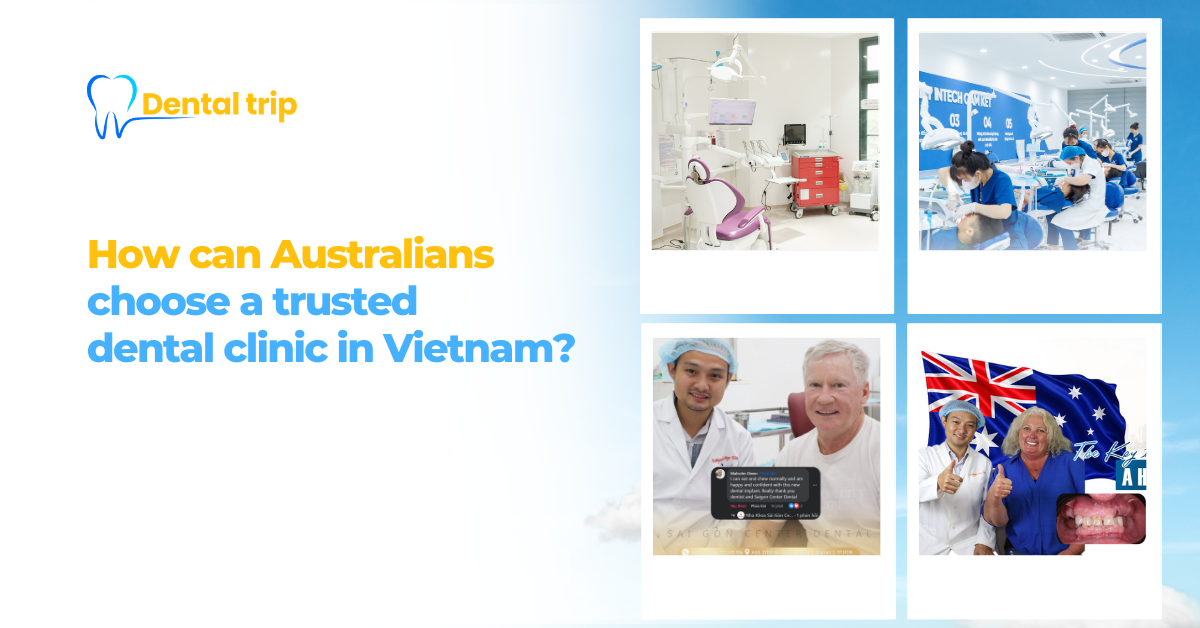
Real Dental Implant Cases: Australian Pensioners Treated in Vietnam
For Australian pensioners considering dental implants in Vietnam, real patient cases can provide a clearer idea of what the treatment process may involve.
The cases below show Australian patients who travelled to Vietnam for full-mouth dental implant treatment.


What Should Australian Pensioners Ask Before Choosing a Clinic?
Whether you choose a clinic in Australia or overseas, ask these questions before committing to treatment:
- Am I medically suitable for dental implants?
- Do I need a CBCT scan or bone graft?
- Who will perform the implant surgery?
- How experienced is the dentist with my type of case?
- Which implant brand and model will be used?
- What type of crown or full-arch restoration is included?
- Does the quoted price include extractions, bone grafting, temporary teeth and the final restoration?
- How many visits will I need?
- How long will I need to stay in Vietnam if I travel overseas?
- What happens if I experience a problem after returning to Australia?
Getting these answers in writing can make it easier to compare treatment plans and avoid unexpected costs.
Dental Implants for Australian Pensioners: Key Takeaways
- Being a pensioner or over 65 does not automatically rule out dental implants.
- Bone condition, gum health, medications and general health are important factors.
- Medicare generally does not cover routine dental implants for adults.
- Private dental implant treatment in Australia can be expensive, especially for full-arch restoration.
- Treatment overseas may offer lower costs, but patients should assess quality, safety and aftercare as well as price.
- Vietnam is an option worth researching for Australian patients, particularly for extensive implant treatment.
- Always confirm the dentist, implant system, complete price and treatment timeline before booking.
- Ask how follow-up care will be handled after you return to Australia.
Need Help Comparing Dental Implant Options in Vietnam?
If you are an Australian considering dental treatment in Vietnam, Dental Trip can help you compare reputable dental clinics and request a free consultation before travelling.
You can share your dental concerns, photos, X-rays or CBCT scans where available, and receive information about potential treatment options and estimated costs from suitable clinics.
The service is free for patients, with no booking or consultation fee.
FAQ
Common questions international patients ask before booking.
Related Articles
Explore more articles related to this topic.


Browse topics
Explore the main DentalTrip guide categories.