
Bone grafting and sinus lift in Vietnam: when you need it and what it costs
Need bone grafting or a sinus lift for dental implants in Vietnam? Learn when these procedures may be needed, how long healing takes and what Australians should know before travelling.
Bone Grafting and Sinus Lift for Dental Implants in Vietnam: What to Expect - Source: dentaltrip.io
Planning to travel from Australia to Vietnam for dental implants? Before booking your flights, there is one important question worth discussing with a dentist: Do you have enough jawbone to support dental implants, or might you need additional procedures such as bone grafting or a sinus lift?
This is a common concern for people researching dental treatment overseas. Knowing whether these procedures may be necessary can help you prepare for additional costs, understand your treatment timeline and avoid unexpected changes to your travel plans.
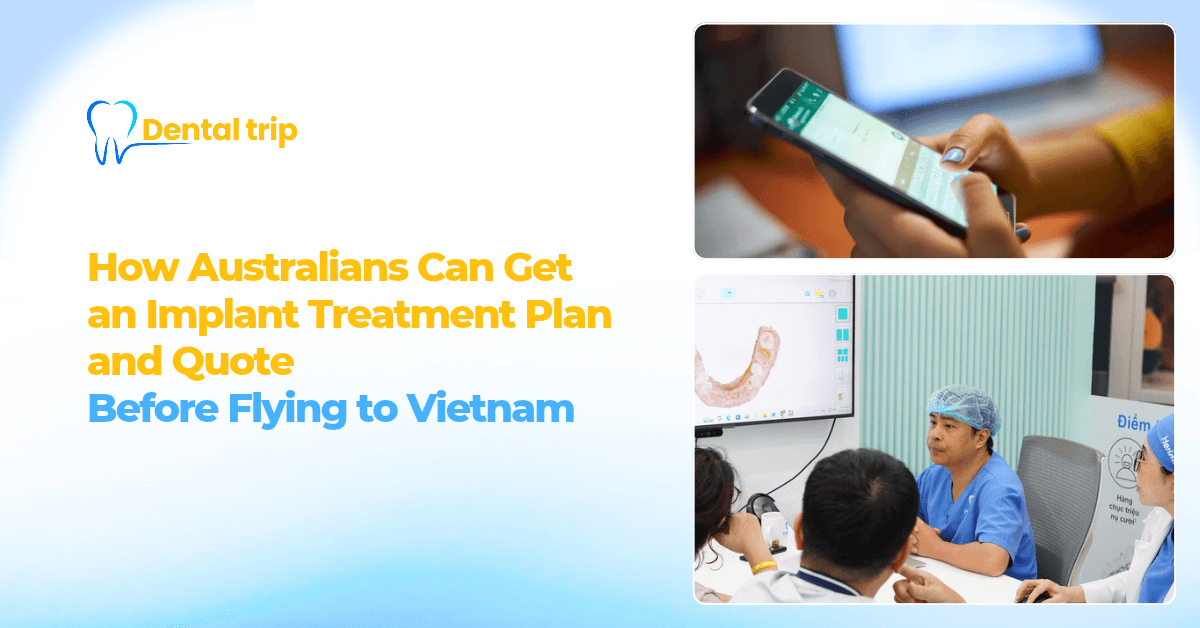
The good news is that you do not always need to wait until you arrive in Vietnam to start discussing your options. By sharing your existing dental X-rays, CBCT scans and medical history with a clinic, you may receive an initial assessment and estimated treatment plan before travelling.
This guide explains the differences between bone grafting and sinus lifts, when dentists may recommend them, how they affect dental implant costs and what Australians should prepare before travelling to Vietnam.
What are bone grafting and sinus lift procedures?
Bone grafting and sinus lifts are procedures used to increase the amount of available bone for dental implant placement. Both may be recommended when the existing jawbone is insufficient, but they address different anatomical situations.
What is bone grafting?
Bone grafting is a procedure that adds bone material to an area of the jaw where additional bone volume is needed.
After a tooth is extracted, the surrounding jawbone can gradually shrink because it no longer receives stimulation from the tooth root. Bone loss can also occur due to gum disease, infection, trauma or other dental conditions.
If there is not enough bone to support an implant securely, a dentist may recommend a bone graft.
Bone grafting may be performed before implant placement or at the same time as implant surgery, depending on how much natural bone remains and whether sufficient initial implant stability can be achieved.
What is a sinus lift?
A sinus lift, also called sinus augmentation, is a procedure used to increase bone height in the upper back jaw.
The maxillary sinuses are air-filled spaces located above the upper back teeth. When these teeth are missing, the jawbone in the area may gradually shrink, while the sinus cavity may expand downward.
As a result, there may not be enough bone height to support dental implants in that area.
During a sinus lift, the dentist gently raises the sinus membrane and places bone graft material beneath it to create additional space for bone formation.
There are two common approaches:
- Internal sinus lift: Usually used when only a relatively small increase in bone height is needed. It is performed through the implant site.
- Lateral window sinus lift: Used when a greater increase in bone height is required. The dentist accesses the sinus through a small opening in the side of the upper jaw.
The appropriate technique depends on the available bone height, the implant site and the patient's anatomy.
What is the difference between bone grafting and a sinus lift?
Although both procedures involve adding bone material, they are not interchangeable.
| Comparison | Bone grafting | Sinus lift |
|---|---|---|
| Main purpose | Increase bone volume in an area of the jaw | Increase bone height in the upper back jaw |
| Common location | Different areas of the upper or lower jaw | Upper jaw, usually around the premolars and molars |
| Main reason | Insufficient bone width or height | Insufficient bone height due to the position of the sinus |
| Procedure | Bone material is added to the deficient area | The sinus membrane is raised and bone material is placed underneath |
Your dentist will explain which procedure is relevant to your situation after reviewing your scans and examining your jawbone.
Can a Vietnamese dental clinic assess your bone graft or sinus lift needs before you fly?
Yes. Many dental clinics can review your existing dental records remotely and provide an initial assessment of whether you may need bone grafting, a sinus lift or other additional procedures.
This is particularly useful if you are travelling from Australia and want to understand the likely treatment costs and timeline before committing to flights.
To help the clinic assess your situation, prepare the following information.
1. Panoramic X-ray (OPG)
A panoramic X-ray provides an overview of your teeth, upper and lower jaw, and surrounding structures.
It can help the dentist identify missing teeth, possible bone loss, existing dental work and areas that may require further investigation.
If you have recently had an OPG in Australia, ask your dentist for a digital copy.
2. CBCT scan
A Cone Beam Computed Tomography (CBCT) scan provides three-dimensional images of your teeth and jawbone.
Unlike a standard panoramic X-ray, a CBCT scan allows the dentist to assess bone height, width and anatomical structures in more detail.
It is particularly useful when evaluating:
- The available bone around a planned implant site.
- The distance between the jawbone and the maxillary sinus.
- The position of important nerves and other anatomical structures.
- The potential need for bone grafting or a sinus lift.
If you already have a recent CBCT scan, ask your Australian dentist for the digital files so the clinic in Vietnam can review them.
You do not necessarily need to arrange a new scan before contacting a Vietnamese clinic. The dentist can advise whether your existing records are sufficient for an initial review.
3. Photos of your teeth and mouth
Clear photos of your teeth, gums and missing-tooth areas can provide additional context.
They may help the dentist understand your current dental condition, although photographs cannot show the internal structure or volume of your jawbone.
4. Your dental and medical history
Provide information about:
- How long you have been missing the affected teeth.
- Previous extractions, implants or bone grafting procedures.
- A history of gum disease or dental infections.
- Any relevant medical conditions.
- Current medications, including those that may affect bone healing or surgery.
The more complete your records are, the more useful the initial consultation is likely to be.
An online review can help identify potential bone deficiencies and likely treatment needs, but it cannot replace an in-person examination and diagnostic imaging. Your treatment plan may change after further assessments in Vietnam. Online consultations provide an initial understanding of your options, not a confirmed diagnosis or final treatment plan.
How do bone grafting and sinus lifts affect dental implant costs and treatment timelines?
Additional bone procedures can increase the overall cost of dental implant treatment and may extend the time before your final crown or bridge is fitted.
The exact impact depends on the extent of bone loss, the procedure required, the materials used and how well the area heals.
Can bone grafting and implant placement be performed at the same time?
In some cases, yes.
If enough natural bone remains to provide initial stability for the implant, the dentist may perform bone grafting and implant placement during the same surgical appointment.
This can reduce the number of separate surgical visits.
However, if the bone deficiency is too extensive, the dentist may recommend completing the grafting procedure first and allowing the area to heal before placing the implant.
Does a sinus lift need to be performed before implant placement?
Not necessarily.
There are two common approaches:
- Simultaneous sinus lift and implant placement: The dentist performs the sinus lift and places the implant during the same procedure, provided sufficient initial stability can be achieved.
- Staged sinus lift: The dentist performs the sinus lift first, then waits for the grafted area to heal before placing the implant.
The choice depends on the amount of existing bone, the required bone augmentation and the patient's clinical condition.
How long does bone grafting or a sinus lift take to heal?
Healing time varies depending on the procedure and the individual patient.
As a general guide:
| Procedure | Approximate healing period |
|---|---|
| Minor bone grafting | Around 3–6 months |
| More extensive bone grafting | Around 4–9 months or longer |
| Sinus lift | Often around 4–9 months before implant placement when performed as a separate procedure |
These are broad estimates, not guaranteed timelines. Some patients may be able to receive implants during the grafting procedure, while others need a longer healing period.
Your dentist will determine when the graft is sufficiently healed for the next stage.
Will you need one, two or more trips to Vietnam?
This depends on your treatment plan.
For example:
Scenario 1: Dental implants without additional bone procedures
- First visit: Implant placement.
- Healing period: Several months for the implant to integrate with the jawbone.
- Second visit: Final crown or bridge placement.
Scenario 2: Bone grafting and implant placement at the same time
- First visit: Bone grafting and implant placement.
- Healing period: Several months.
- Second visit: Assessment and final restoration, if healing is satisfactory.
Scenario 3: Bone grafting or sinus lift before implant placement
- First visit: Bone augmentation procedure.
- Healing period: Several months.
- Second visit: Implant placement.
- Further healing period.
- Third visit: Final crown or bridge placement.
These are examples rather than fixed schedules. In some cases, dentists can combine stages or arrange alternative treatment sequences.
If you are travelling from Australia, ask the clinic to provide an estimated schedule for each stage before booking your flights.
What should Australians know about recovery after bone grafting or a sinus lift?
Recovery is an important part of planning dental treatment overseas. Even if your surgery is completed successfully, you need enough time for the initial healing period and any required follow-up appointments before returning to Australia.
Recovery after bone grafting
After a bone graft, you may experience:
- Swelling around the surgical area.
- Mild to moderate discomfort.
- Bruising around the cheek or jaw.
- Minor bleeding during the initial recovery period.
Your dentist may recommend:
- Eating soft foods and avoiding chewing directly on the treated area.
- Avoiding smoking during the healing period.
- Maintaining oral hygiene according to the dentist's instructions.
- Taking prescribed medication as directed.
- Attending follow-up appointments to monitor healing.
- Avoid disturbing the surgical site, particularly during the early stages of recovery.
Additional precautions after a sinus lift
A sinus lift requires some additional precautions because the procedure involves the sinus membrane.
Your dentist may advise you to:
- Avoid blowing your nose for the period recommended by the surgeon.
- Sneeze with your mouth open to reduce pressure in the sinus.
- Avoid using straws if advised.
- Avoid strenuous physical activity during the initial recovery period.
- Follow instructions about flying, swimming and other activities that may affect sinus pressure.
These precautions are important because excessive pressure can interfere with healing or affect the surgical site.
Can you fly back to Australia after a bone graft or sinus lift?
You should discuss your return flight with your treating dentist before booking your travel.
The appropriate time to fly depends on the procedure, the extent of surgery, your recovery and any sinus-related considerations.
This is particularly important after a sinus lift, as changes in air pressure during flying may be a concern during the early healing period.
Before leaving Vietnam, ask your dentist to confirm:
- When you can safely fly back to Australia.
- Whether you need a follow-up examination before departure.
- What symptoms require urgent attention.
- Which medications or aftercare products you should bring home.
How to contact the clinic if you experience problems after returning to Australia.
Do not assume that the same travel schedule applies to every patient.
If you experience worsening pain, persistent bleeding, fever, increasing swelling, unusual nasal discharge or other concerning symptoms, contact your treating clinic promptly.
What should you ask a Vietnamese dental clinic before committing to treatment?
Before choosing a dental clinic, make sure you understand the proposed treatment plan, the dentist's experience and the total estimated cost.
Here are some questions worth asking during your consultation:
About your bone condition
- Based on my current X-ray or CBCT scan, do I appear to have enough bone for dental implants?
- Might I need a bone graft or sinus lift?
- Can these procedures be performed at the same time as implant placement?
About the treatment cost
- How much does the bone graft or sinus lift cost?
- Does the quote include bone graft material, membranes and other necessary components?
- Are there any additional costs that may arise after an in-person examination?
About your treatment schedule
- How many trips to Vietnam might I need?
- How long should I stay in Vietnam after each procedure?
- How many months of healing are expected between treatment stages?
About aftercare
- What follow-up support is available after I return to Australia?
- Who should I contact if I experience complications at home?
- Can I receive copies of my treatment records and imaging for my Australian dentist?
A transparent clinic should be able to explain why a procedure is recommended, what alternatives may be available and what is included in the estimated price.
Start planning your dental implants before you fly
You do not have to wait until you arrive in Vietnam to start exploring your dental treatment options.
If you are in Australia and considering dental implants in Vietnam, you can share your dental needs and existing records, such as X-rays or CBCT scans, with Dental Trip.
We can help connect you with up to three partner clinics in Vietnam for an initial review, treatment recommendations and estimated quotes in AUD.
Getting an initial understanding of your options before travelling can help you prepare your budget, allow time for any additional procedures such as bone grafting or a sinus lift, and plan your treatment schedule more carefully. Keep in mind that the final treatment plan and costs can only be confirmed after an in-person examination in Vietnam.
Related Articles
Explore more articles related to this topic.


Browse topics
Explore the main DentalTrip guide categories.